







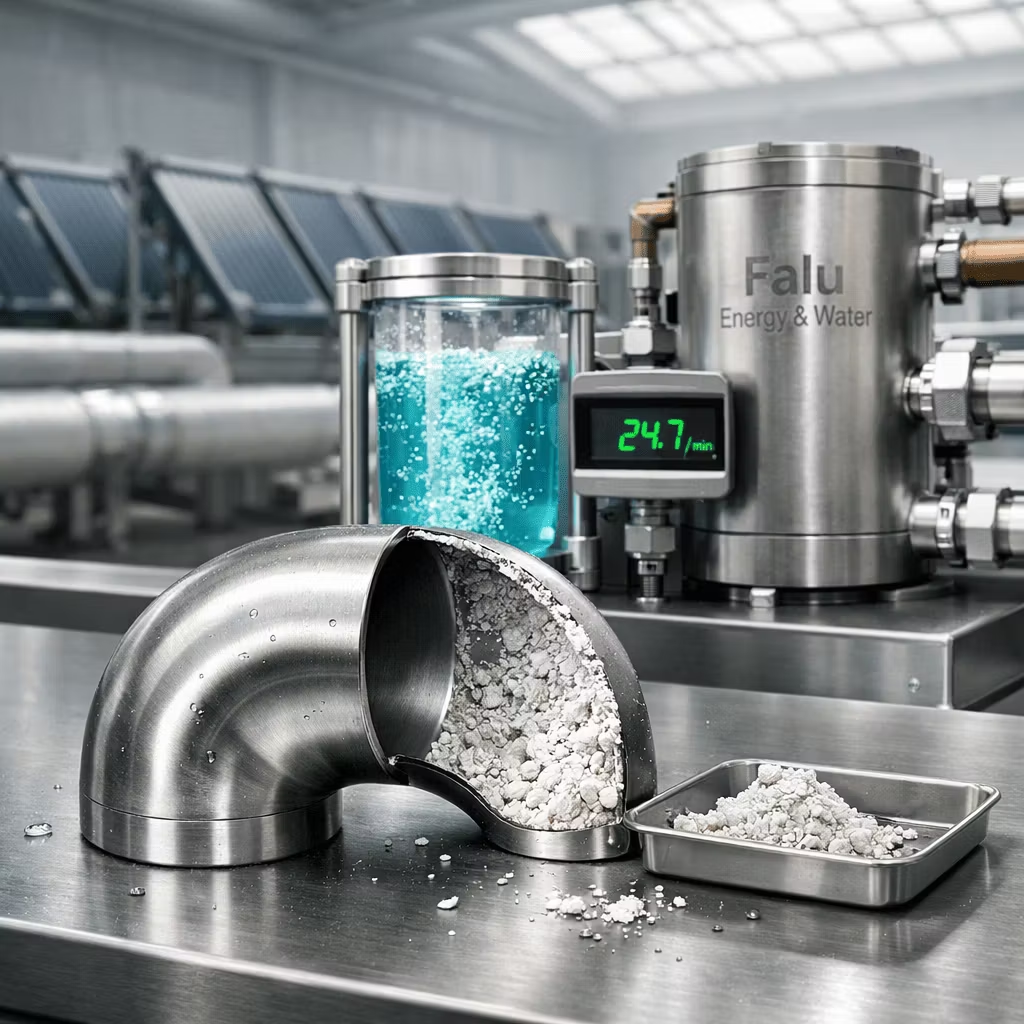
TAC limescale protection – Salt-free solution against limescale deposits
Industrial TAC limescale protection – Salt-free solution against limescale deposits TAC salt-free limescale protection – effective solution against limescale deposits in industry and properties
In industrial settings, the presence of limescale can lead to significant operational challenges, impacting both efficiency and maintenance costs. As water evaporates, it leaves behind calcium carbonate deposits that can accumulate in pipes, boilers, and heat exchangers. This buildup not only decreases the lifespan of equipment but also necessitates frequent cleaning and repairs, leading to increased downtime and resource expenditure. Businesses are thus seeking effective solutions to combat limescale and improve overall productivity.
One of the most innovative approaches to limescale management is the use of TAC (Template Assisted Crystallization) salt-free systems. These technologies offer a sustainable alternative to traditional salt-based water softening methods, which can have adverse environmental impacts. By understanding the mechanics of limescale and the necessity for protective measures, industries can make informed decisions that enhance operational efficiency while minimizing ecological footprints.
This article delves into the nature of limescale, its effects on various sectors, and the need for robust limescale protection strategies. Specifically, we will explore the advantages of TAC salt-free systems, highlighting why they are becoming the preferred choice for many businesses aiming to mitigate the challenges associated with limescale deposits.
Understanding Limescale and Its Impact
/>
What is Limescale?
Limescale is a hard, chalky deposit primarily composed of calcium carbonate , which forms when water containing dissolved minerals evaporates. This process is commonly observed in areas with hard water, where high concentrations of calcium and magnesium are present. Over time, these deposits accumulate on surfaces, leading to a variety of issues in both residential and industrial contexts.
In industrial environments, limescale can build up on pipes and machinery, obstructing water flow and reducing efficiency. The formation of limescale is not just an aesthetic concern; it poses significant operational risks, including increased energy consumption and compromised equipment integrity.
How Limescale Affects Industries and Properties
The implications of limescale are far-reaching across different industries. In manufacturing, it can lead to reduced heat transfer efficiency in boilers, requiring more energy to achieve desired temperatures. This inefficiency can ultimately spike operational costs. In the hospitality sector, limescale can mar the appearance of fixtures and appliances, leading to negative guest experiences and increased cleaning efforts.
In the healthcare industry, limescale buildup in water systems can pose hygiene risks, as it may harbor bacteria and lead to contaminated water supplies. Furthermore, industries reliant on precise machinery, such as pharmaceuticals and food production, cannot afford the disruptions caused by limescale, as it may affect product quality and safety.
In summary, limescale is a pervasive issue that not only affects the performance of individual systems but also has broader economic and operational consequences for industries and property owners alike.
The Need for Effective Limescale Protection
! The Need for Effective Limescale Protection
/images/image_1.jpg)
Traditional Solutions and Their Limitations
Historically, the primary method for combating limescale has been through the use of salt-based water softeners. These systems work by exchanging calcium and magnesium ions with sodium ions, effectively reducing the hardness of water. While they can be somewhat effective, traditional systems come with a range of limitations.
Firstly, the use of salt can lead to environmental concerns, including increased sodium levels in water supplies. Additionally, these systems require regular maintenance and salt replenishment, which can increase operational costs and labor. Moreover, salt-based systems do not prevent limescale; they merely manage its formation, often resulting in recurring issues.
Why Choose Salt-Free Solutions?
Given the limitations of traditional salt-based systems, many industries are turning to salt-free solutions like TAC systems. TAC technology operates on a different principle, using a process to convert hardness minerals into harmless microscopic crystals that can be easily flushed away. This method eliminates the need for salt while effectively preventing limescale buildup.
The benefits of TAC systems are manifold. They not only reduce maintenance costs by minimizing limescale formation but also contribute to environmental sustainability. Additionally, TAC systems do not alter the chemical composition of water, thus preserving its quality. As industries become more conscious of their ecological impact, the shift towards salt-free solutions represents a forward-thinking approach to limescale management.
By understanding the drawbacks of traditional solutions and the advantages of modern technologies, businesses can make informed decisions that enhance efficiency and sustainability in their operations.
TAC Salt-Free Limescale Protection Overview
How TAC Technology Works
Template Assisted Crystallization (TAC) is a revolutionary technology designed to combat limescale without the use of salt. This system works by transforming hardness minerals, such as calcium and magnesium , into microscopic crystals that can be easily carried away by the water flow. The process begins when hard water passes through a TAC unit containing specialized media that promotes crystallization. As the minerals adhere to the media, they form stable, non-adhering crystals that do not precipitate on surfaces. This innovative approach ensures that rather than creating harmful deposits, the minerals remain suspended in the water, effectively preventing limescale buildup in pipes and appliances.
Benefits of TAC Salt-Free Systems
The adoption of TAC salt-free systems offers an array of benefits for both industrial and residential applications. Some of the key advantages include:
1. Environmental Sustainability : TAC systems do not use salt, thus avoiding the environmental risks associated with sodium discharge into water systems.
2. Reduced Maintenance : With less limescale formation, there is a significant reduction in the frequency of maintenance and cleaning required for equipment and piping systems.
3. Preserved Water Quality : Unlike traditional systems, TAC does not alter the chemical composition of water, ensuring that the water remains safe and palatable.
4. Cost-Effectiveness : By minimizing downtime and maintenance costs, TAC systems provide a more economical solution over time, especially for businesses that rely heavily on machinery and water systems.
These benefits make TAC systems a compelling choice for industries looking to enhance operational efficiency while being mindful of their environmental footprint.
Best Practices for Implementing TAC Systems
/>
Steps for Successful Installation
Implementing a TAC salt-free system requires careful planning and execution to ensure optimal performance. Here are key steps to follow during installation:
1. Assessment of Current Systems : Evaluate existing water systems to identify limescale issues and the best location for TAC installation.
2. Proper Sizing : Choose a TAC system that is appropriately sized for the specific water demand and hardness levels of your facility.
3. Professional Installation : Engage certified professionals to install the system, ensuring compliance with local regulations and standards.
4. System Calibration : After installation, calibrate the system to ensure it operates effectively and meets the desired water quality standards.
Maintenance Tips for Longevity
To ensure the longevity and efficiency of TAC systems, regular maintenance is essential. Here are vital tips to follow:
1. Routine Inspections : Conduct periodic inspections to check for any signs of wear or performance issues.
2. Media Replacement : Depending on usage, the TAC media may need replacement every 3-5 years; adhere to manufacturer recommendations.
3. Water Quality Testing : Regularly test water quality to ensure the TAC system is performing as expected and to make necessary adjustments.
4. Keep System Clean : Maintain cleanliness around the installation area to prevent debris from entering the system and affecting performance.
Following these best practices will help ensure that TAC systems operate efficiently and provide long-term protection against limescale.
Comparing TAC Salt-Free Solutions to Traditional Methods
! Comparing TAC Salt-Free Solutions to Traditional Methods
/images/image_2.jpg)
Key Features of TAC vs. Salt-Based Systems
| Feature | TAC Salt-Free Systems | Salt-Based Systems
| Water Quality Impact | Maintains natural mineral content | Alters mineral balance by adding sodium
| Environmental Impact | Eco-friendly, no sodium discharge | Can increase sodium levels in local water supply
| Maintenance Frequency | Low maintenance, less frequent cleaning Requires regular salt replenishment and maintenance
| Limescale Prevention | Converts hardness minerals into harmless crystals | Reduces hardness but does not prevent limescale
TAC systems provide a modern, sustainable alternative to traditional salt-based water softeners, focusing on limescale prevention and environmental stewardship. The comparison highlights significant advantages in water quality preservation and reduced maintenance efforts, making TAC systems a superior choice for many applications.
Case Studies: Successful TAC Implementations
Industry Applications
TAC salt-free systems have been successfully implemented across various industries, showcasing their effectiveness in managing limescale. For instance, in the food processing sector, a leading manufacturer adopted a TAC system to combat limescale buildup in their pasteurization equipment. Before installation, they faced frequent maintenance shutdowns due to limescale, which resulted in costly production delays. After implementing the TAC system, they reported a 50% reduction in maintenance frequency and a significant improvement in energy efficiency, allowing them to maintain smooth operations and reduce downtime.
In the hotel industry , a large resort in a hard water area faced challenges with limescale affecting their plumbing systems and guest amenities. By replacing their salt-based softeners with a TAC system, they eliminated the need for salt replenishment and reduced limescale buildup in showers and appliances. This transition not only enhanced guest satisfaction but also cut down on cleaning costs by 30% , demonstrating the positive impact of TAC technology.
Residential Success Stories
Homeowners are also experiencing the benefits of TAC systems. In a case study from a suburban neighborhood, residents reported persistent limescale issues that affected their dishwashers and water heaters. After installing a TAC salt-free system, residents noted a marked improvement in appliance performance, with one homeowner stating, “Our dishwasher now runs efficiently, and we no longer see the white residue on our dishes.”
Another residential success story involved a family who managed to reduce their water heating costs significantly. With the TAC system in place, they observed a 20% decrease in energy bills, as their water heater no longer had to work overtime to overcome limescale-induced inefficiencies. These examples illustrate how TAC systems are transforming limescale management in both industrial and residential settings, providing effective, sustainable solutions.
> "Switching to a TAC system was the best decision we made for our home. The difference in water quality and appliance longevity is remarkable."
Future of Limescale Protection Technology
Innovations on the Horizon
As technology continues to evolve, the future of limescale protection looks promising. Emerging innovations in TAC systems are focusing on enhancing efficiency and expanding applications. One such advancement is the integration of smart technology into TAC systems, which allows for real-time monitoring of water quality and limescale levels. This capability enables users to receive alerts and insights through mobile applications, ensuring optimal performance and timely maintenance.
Additionally, researchers are exploring the use of nanotechnology to improve the crystallization process within TAC systems. By utilizing engineered nanoparticles, the effectiveness of limescale prevention could be significantly enhanced, offering even greater protection against buildup. These innovations not only promise to improve existing technologies but also aim to make limescale management more user-friendly and efficient.
Predictions for 2026
Looking ahead, experts predict that by 2026, TAC salt-free systems will become the standard for limescale protection across various sectors. As sustainability becomes a top priority for businesses and consumers alike, the demand for eco-friendly solutions will drive the adoption of TAC technology. Industry analysts forecast a 30% increase in TAC system installations over the next few years, as more entities recognize the long-term economic and environmental benefits.
Furthermore, regulatory changes aimed at reducing sodium discharge into wastewater are likely to accelerate the shift away from traditional salt-based systems. As more industries seek compliance with environmental standards, TAC systems will be positioned as the go-to alternative for effective limescale management. The combination of innovation, regulatory support, and growing awareness of sustainability will shape a future where TAC technology plays a pivotal role in protecting against limescale deposits.
Frequently Asked Questions
What is TAC salt-free limescale protection?
TAC salt-free limescale protection utilizes Template Assisted Crystallization technology to prevent limescale buildup. Instead of using salt to soften water, TAC systems convert hardness minerals like calcium and magnesium into microscopic crystals that do not adhere to surfaces. This process helps maintain the efficiency of water systems without altering the water's chemical composition.
How does TAC technology differ from traditional salt-based systems?
TAC technology differs fundamentally from traditional salt-based systems in its approach to managing hardness minerals. While salt-based systems replace calcium and magnesium ions with sodium ions, TAC systems prevent limescale formation by crystallizing these minerals, allowing them to be flushed away without altering the water quality. This makes TAC systems more environmentally friendly and reduces maintenance needs.
What are the benefits of using TAC systems in industrial settings?
TAC systems offer numerous benefits in industrial settings, including reduced maintenance costs due to lower limescale buildup, preservation of water quality, and elimination of the need for salt replenishment. Additionally, these systems contribute to energy savings by improving the efficiency of boilers and other machinery, ultimately leading to cost reductions in operational expenses.
Are there any maintenance requirements for TAC systems?
While TAC systems require less maintenance than traditional salt-based systems, some routine checks are necessary to ensure optimal performance. Regular inspections should be conducted to monitor system functionality, and the TAC media may need replacement every 3-5 years, depending on usage. Maintaining cleanliness around the system installation area also helps prevent debris from affecting performance.
Can TAC systems be used in residential applications?
Yes, TAC systems are suitable for residential applications as well. Homeowners can benefit from the reduced limescale buildup in appliances such as dishwashers and water heaters, leading to improved efficiency and lower energy bills. TAC technology provides an effective solution for managing hard water issues without the drawbacks associated with salt-based systems.